
Inside Integrative Care at WellSpot: A Look at How We Support Patients
Most people who book integrative care for the first time have no idea what they are walking into. The category covers everything from a twenty minute vitamin drip to a months-long protocol for a complex diagnosis, so "integrative clinic" tells you almost nothing about the experience. This is a straightforward account of how it actually runs at our Owasso clinic, what the room feels like, and who we turn away. Our what we treat pages cover the clinical detail by condition. This piece is about the process.
Two different patients, two different visits
The general wellness visit is short. You are run down, fighting something off, or coming off a hard week. You pick a drip, you come in, our nurses get you set up, and you are out in under an hour. No labs, no protocol, no big conversation.
The complex visit is a different thing entirely. Someone dealing with a cancer diagnosis, long-running tick-borne illness, an autoimmune condition, or years of unexplained fatigue is not going to be well served by picking a bag off a menu. That patient goes through a process, and the process is the point.
Both are welcome. They just do not look the same, and it helps to know which one you are before you book.
Step one: we want to know what is actually going on
For complex cases we start with information, not treatment.
That means your history, whatever testing you already have, and what your other providers are doing. Most patients who come to us for the advanced side arrive with a folder, and we read it. Then our providers say which additional lab testing would actually change the plan, rather than ordering a broad panel because it is available.
The reason we are strict about this order is simple. Nutrient support built on guesswork is expensive and usually beside the point. Support built on knowing your ferritin is low, or your inflammatory markers are up, or that you are not absorbing much of anything, is a different conversation.
Step two: a plan you can actually see
Once results come back, our providers build a plan around them and around what else is happening in your care. You get told what is in it, what each piece is for, and how often we expect to see you.
You also get told what we are leaving out. If something on our menu is not appropriate for your situation, we say so and we say why. Patients with cancer diagnoses hear this most, because timing around active treatment shapes everything. Our cancer care support works alongside oncology rather than around it, and that means some things get spaced out or skipped entirely on your oncologist's word.
Nobody leaves with a package they did not understand. If you feel pressure to commit to a block of sessions on day one, you are in the wrong clinic, and that includes ours.
Step three: the treatment itself
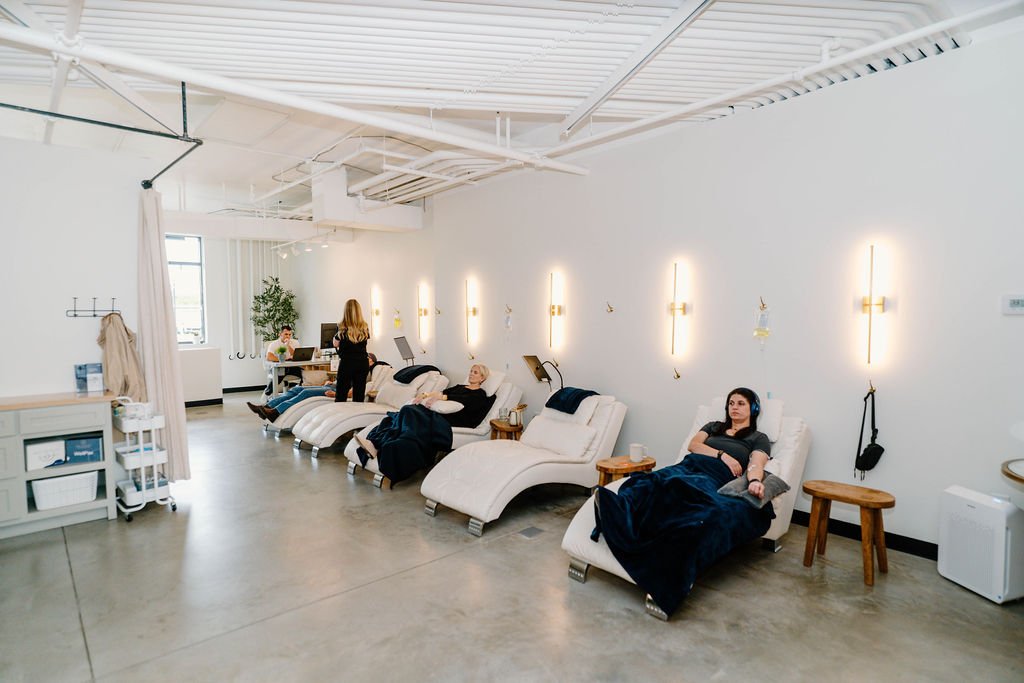
The room is deliberately not clinical-feeling. Reclining chairs, warm light, headphones and eye masks if you want them, something to drink. Sessions for advanced protocols run long, an hour and a half is common, so comfort is not a luxury detail.
Our nurses do the setup and stay with it. They also do the host side of the job, which is intentional. Being hooked to an infusion for ninety minutes is a strange experience the first few times, and having someone actually present matters more than most clinics account for.
Patients who come regularly tend to settle into a rhythm and a preferred chair. That is a good sign. If treatment feels like a chore you dread, something is off, and we would rather you tell us.
The first appointment is mostly conversation, which surprises people who expected to be hooked up to something on day one.
If you want to see the space before committing to anything, call (918) 265-4811. You are welcome to come look.
Who we turn away, and why we tell you
This is the section most clinics leave out, and it is the one we think earns the most trust.
There are people we screen out. Certain heart and kidney conditions make the fluid volume in an IV a genuine concern. Pregnancy changes what is appropriate. High-dose vitamin C requires screening for an inherited enzyme condition called G6PD deficiency before anyone gets near it. Some medications interact with things we offer.
There are also people we could technically treat and choose not to. If someone arrives convinced an infusion will fix a problem that needs a diagnosis, the right answer is a workup, not a drip. If someone in active cancer treatment wants something their oncologist has advised against, the answer is no.
And there are people whose money is better spent elsewhere. If your labs come back clean and you are absorbing fine, you probably do not need IV nutrients, and we will tell you that even though it costs us the sale.
Working with the providers you already have
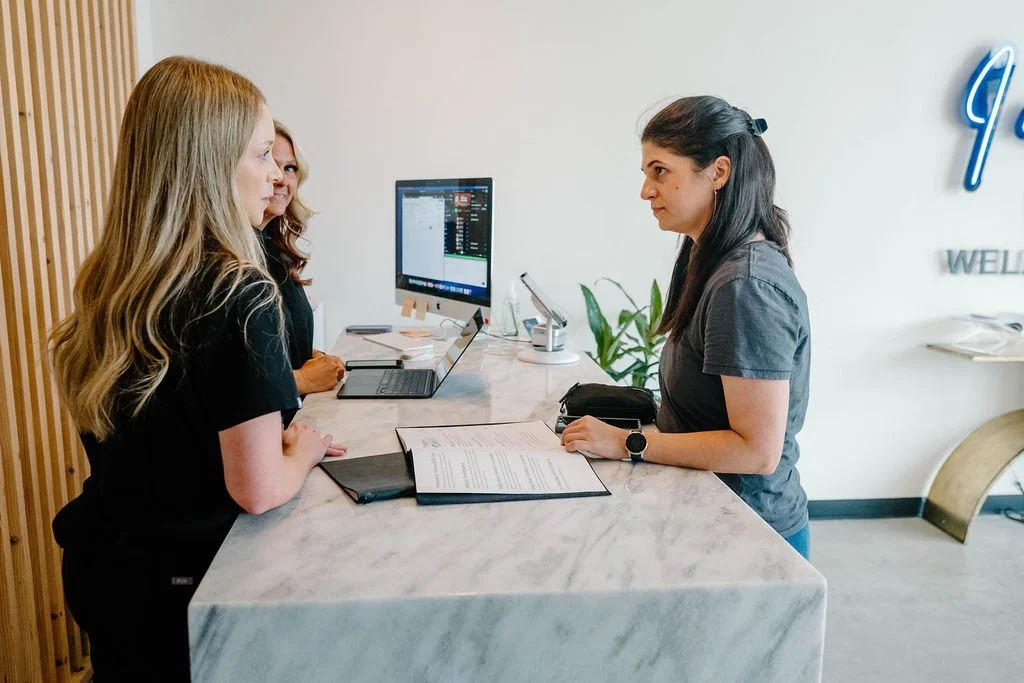
We are one piece of a larger picture for almost everyone we see. Oncologists, rheumatologists, infectious disease specialists, primary care providers, and our sister functional medicine practice next door all end up in the mix
That is the way it should work. We are not trying to replace anybody's physician, and we ask patients to keep their care team informed rather than running parallel tracks that never meet. Coordinated care is safer and it works better.
More about the clinic and how it came about is on our about page.
Finding us
We are on South Main Street in Owasso, and patients come to us from Collinsville, Skiatook, Claremore, Broken Arrow and throughout Tulsa. Directions and hours are on our location page.
For a lot of the patients we support, the local part is the whole reason this works. Advanced integrative therapies are usually a long drive, and a long drive during a hard treatment stretch often means it simply does not happen.
If you are dealing with something complicated and want a straight conversation about whether we can help, book a consultation or call (918) 265-4811.
Frequently asked questions
Do I need labs before my first IV? Not for general wellness drips. For advanced or condition-specific protocols, yes, because building a plan without knowing your levels means guessing at what you need.
How long does an appointment take? General wellness drips usually run under an hour. Advanced protocols often take an hour and a half or more, so plan your day accordingly.
Can I come in if I am already under a specialist's care? Yes, and most of our complex-case patients are. We will ask who is involved and we will ask you to keep them informed, particularly around timing if you are in active cancer treatment.
Are there people who should not get IV therapy? Yes. Certain heart and kidney conditions, pregnancy, some medications, and specific screening requirements for high-dose protocols all affect what is appropriate. We screen before treating, and sometimes the answer is no.
Do you pressure people into packages? No. You get a plan you understand and you decide what to do with it. Plenty of patients start with one session and go from there.
Double-click to edit...
