
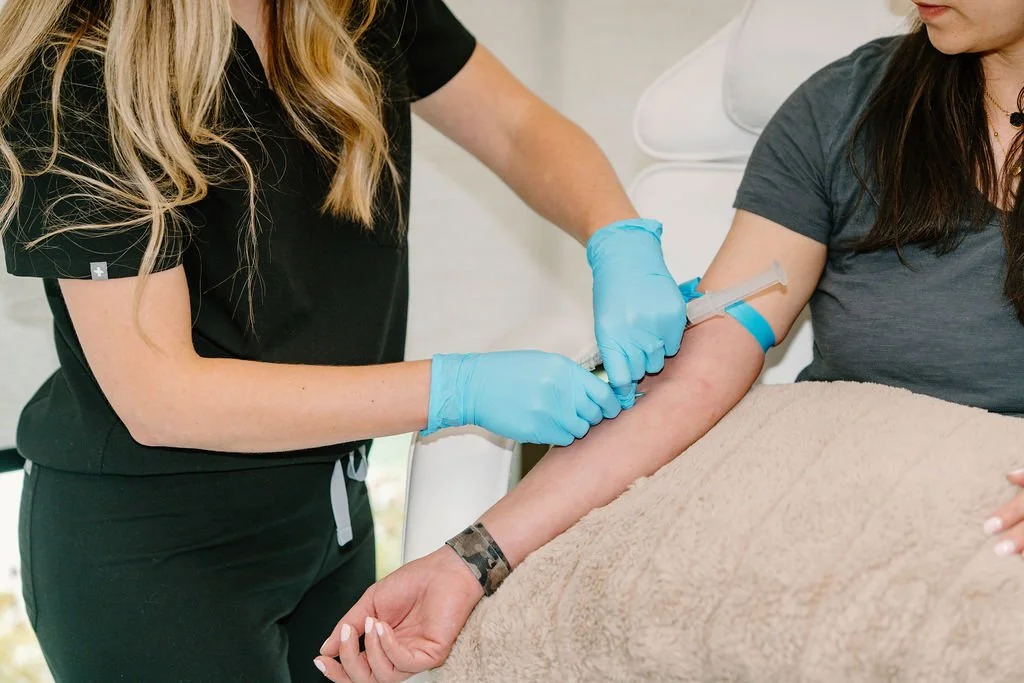
If you have been tired for months, your glands swell up every few weeks, and someone told you it might be Epstein-Barr virus reactivating, you probably have questions. Maybe also a lab report you cannot make sense of. This piece walks through what EBV reactivation symptoms tend to look like, why the testing is so confusing, and what supportive care can and cannot do. Our tick-borne and chronic viral condition support at WellSpot IV in Owasso works alongside the physician who is managing your diagnosis.
Almost everyone already has EBV
Epstein-Barr is the virus behind mono. More than nine in ten adults have been infected at some point, many without ever knowing it. After the first infection, the virus does not leave. It goes quiet inside certain immune cells and stays there for life.
Most of the time a healthy immune system keeps it in check without any symptoms. The idea behind "reactivation" is that during periods of stress, illness or immune strain, the virus becomes more active again.
What EBV reactivation symptoms tend to look like
People who are told they have reactivation usually describe some mix of:
Fatigue that is out of proportion to what they are doing
Swollen or tender lymph nodes in the neck
Recurring sore throat or low-grade feverish feelings
Muscle aches
Brain fog
A sense of never quite recovering from the last cold
The problem is that every one of those symptoms has other possible causes, including thyroid disease, anemia, sleep problems, depression, other infections and ME/CFS. That overlap is why the pattern matters more than any single symptom, and why a workup should rule out the common causes first.
Why EBV blood tests are confusing
EBV testing measures antibodies, and different antibodies appear at different stages:
VCA IgM usually signals a recent first infection
VCA IgG and EBNA IgG show a past infection and stay positive for life
Early antigen (EA-D) IgG is the one often read as "reactivation"
Here is the catch. EA antibodies can stay positive for years in people who feel completely fine. So a positive EA result does not, by itself, prove the virus is causing your symptoms. Researchers are still arguing about how to define reactivation in people with otherwise normal immune systems, and there is no agreed test that settles it.
Some clinicians also check an EBV DNA level in the blood (a viral load). That can be more useful in specific situations, especially in people with weakened immune systems.
If someone hands you a positive EA result and a long treatment plan in the same visit, ask more questions. Our lab testing is read with that caution, and our providers will tell you when a result is ambiguous.
Rare but serious: chronic active EBV
There is a recognized and much more serious condition called chronic active EBV (CAEBV). It is rare in the United States, involves very high viral levels and ongoing fevers, enlarged spleen or liver, and abnormal blood counts. It needs care from a hematology or infectious disease specialist.
That is not what most people mean when they say reactivation, but it is worth knowing it exists. Persistent fevers, night sweats, or unexplained weight loss need a physician's workup, not a wellness plan.
Other viruses that come up
EBV is the most talked-about, but it is not the only one. Other herpes-family viruses like CMV and HHV-6 also stay in the body for life. Research on long COVID has looked at whether some of these become more active after a serious infection, and there are interesting findings, but nothing yet that tells you what to do for one person.
There is also strong research tying past EBV infection to a higher risk of multiple sclerosis. That is a population finding, and it does not mean a positive test predicts MS for you.
If you are trying to figure out whether a reactivation pattern fits what you are going through, call (918) 265-4811. We will talk through what you already have on paper before suggesting anything new.
What supportive care can do
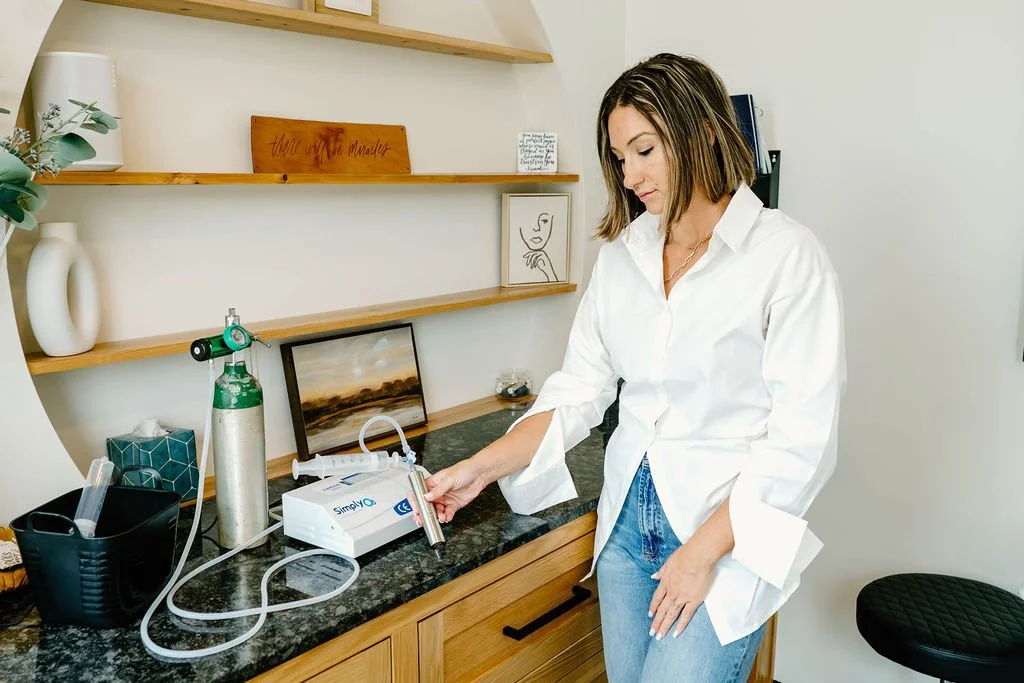
There is no approved treatment that clears EBV from the body, and nothing we offer is antiviral treatment. What supportive care aims at is the person: how depleted you are, whether you are absorbing nutrients, and how your body is coping.
For some patients that means correcting deficiencies found on testing, IV hydration and nutrient support during rough stretches, or advanced IV therapy options such as high-dose vitamin C or ozone when our providers think they are appropriate. Our piece on ozone therapy for chronic viral and immune conditions explains what that visit looks like and what the evidence does and does not show.
Pacing matters too. If you crash for days after doing too much, that pattern (post-exertional malaise) changes how you should approach activity. We covered it in post-viral syndrome and long-haul recovery.
A sensible order of operations
See your primary care provider and rule out the common causes of fatigue.
If EBV testing is done, have someone explain each antibody, not just "positive."
Work on sleep, pacing and nutrition, which help regardless of the cause.
Add supportive care if testing shows a need or you are struggling to keep up.
When you want a second set of eyes on your results, book a results review or call (918) 265-4811. You can read more about our approach on the chronic viral condition support page.
Frequently asked questions
What are the symptoms of EBV reactivation?
People commonly report fatigue, swollen lymph nodes, sore throat, muscle aches and brain fog. These overlap with many other conditions, so other causes should be ruled out first.
Does a positive early antigen test mean my EBV is active?
Not necessarily. Early antigen antibodies can stay positive for years in healthy people. A result needs to be read alongside your symptoms and other markers.
Can EBV reactivation be cured?
EBV stays in the body for life and there is no approved treatment that removes it. Supportive care focuses on how you feel and function, alongside your physician's care.
Should I see a specialist?
If you have ongoing fevers, night sweats, weight loss or abnormal blood counts, yes. Those need a physician's workup to rule out conditions like chronic active EBV.
Double-click to edit...
